
RESOURCES
Reports & Data
If you find these materials helpful, let us know! Ask us how IDG can provide your organization with a related training session, develop a toolkit, conduct a study, and more.
-
Occupational Desegregation Guide
Developed in partnership with GROWN / Lyra Colorado, this guide is written to help identify and address occupational segregation. Almost 90 percent of occupations in the U.S. are racially segregated today, and the jobs where marginalized workers cluster tend to pay less, offer fewer benefits, and carry more risk, for every worker. This matters for anyone working in education or workforce development because the sorting starts long before graduation. This guide is for people who sit close to that sorting: teachers, counselors, workforce program staff, parents, and community leaders who have career and pathway conversations with learners and earners.
-
Green Workforce Educator Guide
Developed in partnership with GROWN / Lyra Colorado, this guide is written primarily for secondary and post-secondary educators, including: Career and Technical Education (CTE) instructors, workforce development practitioners and program directors, Counselors helping students navigate green career pathways, curriculum developers working on sustainability or energy programs, and administrators seeking to align programming with regional labor market needs. It is also a useful reference for employer partners, workforce boards, and community-based organizations working alongside educational institutions.
-
Green Workforce Educator Toolkit Companion
Developed in partnership with GROWN / Lyra Colorado to support K-12 educators in classrooms developing the future green workforce, this toolkit companion includes:
· Worksheets & handouts
· Rubrics & assessments
· Links & references
· Green skills identification and other activities
-
WIOA Provider Guide
Developed in partnership with CYC and DOYI, this guide is designed specifically for nonprofit education and training providers in Denver who want to understand how to partner with the WIOA program to serve their participants. Similar processes are in place across Colorado in local workforce centers and WIOA uses and eligibility largely remains the same. Whether you work with young adults aged 16–24, working-age adults, or employers, this workbook explains eligibility requirements, the referral process, what funding can cover, and how to navigate the partnership process effectively.
-
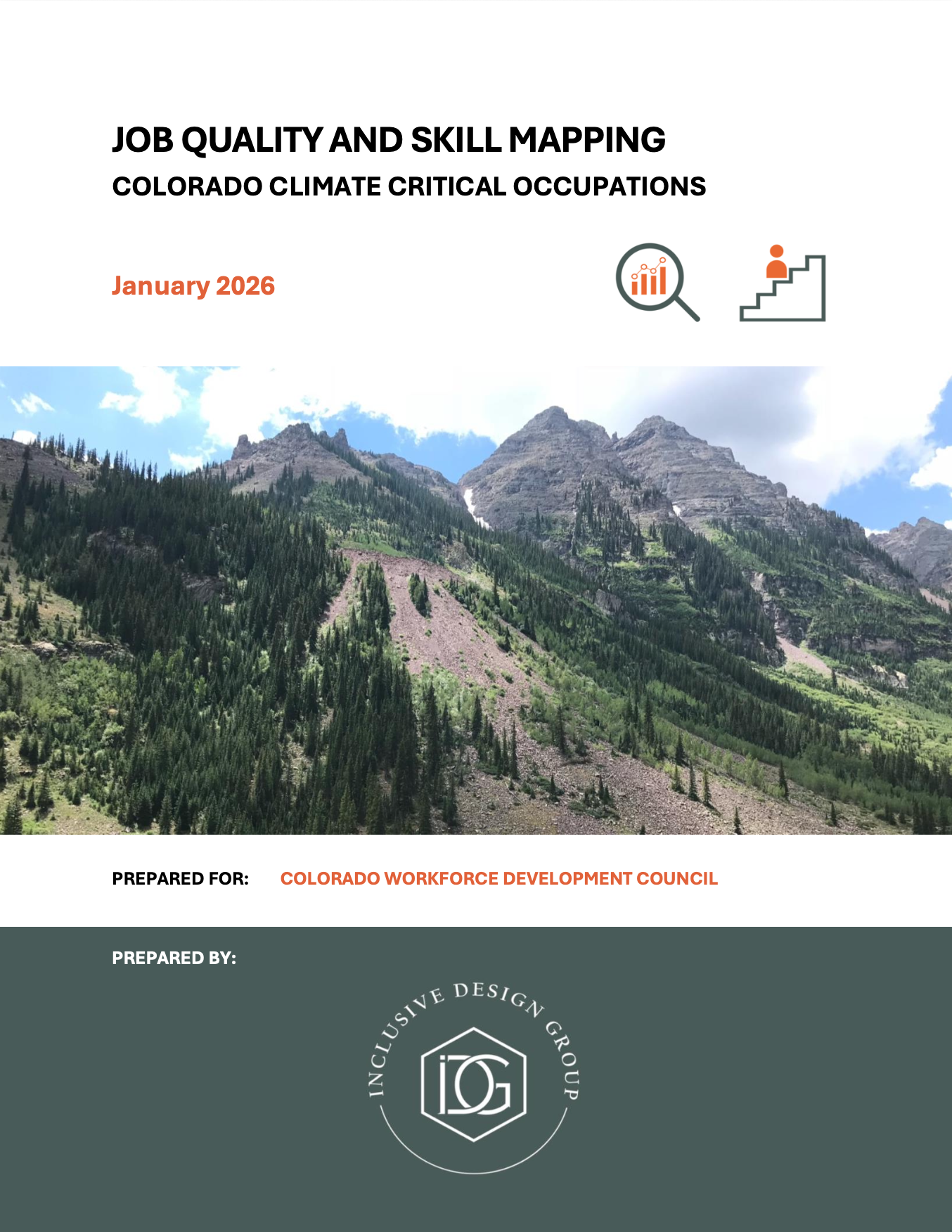
Job Quality / Skills in Climate Critical Occupations
IDG supported the Colorado Workforce Development Council to advance skills-first hiring and job quality across the state’s climate workforce. The work aligned with the Colorado Energy Office’s 2025 Climate Workforce Analysis & Plan and focused on 20 Climate Critical Occupations, prioritized for their projected growth and importance to the state’s climate and energy transition. Through research, outreach, employer engagement, interviews, and surveys, IDG gathered insight into workforce needs, job quality conditions, and the skills, both technical and transferable, that employers value.
-
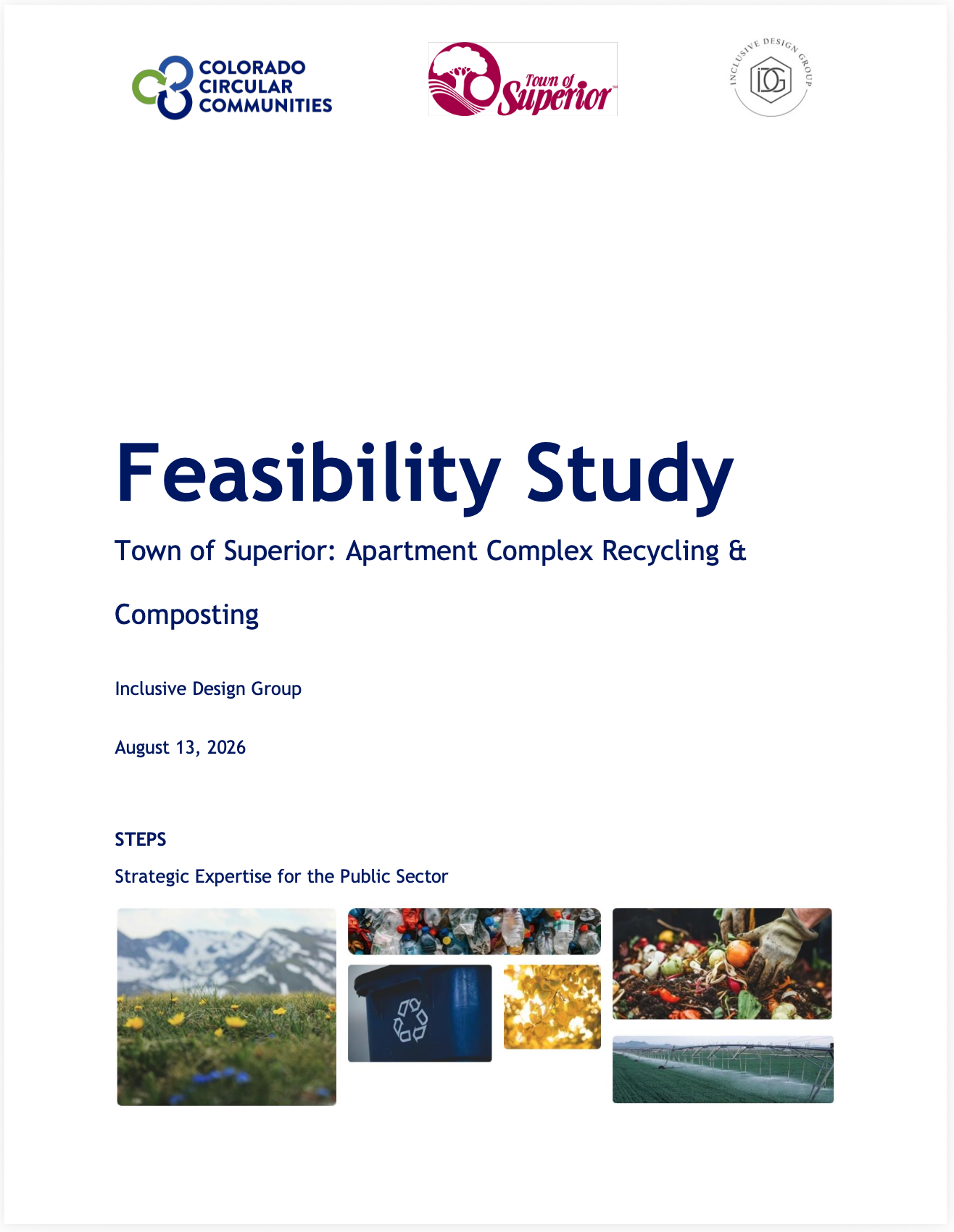
Feasibility Study for Town of Superior
IDG supported Colorado Circular Communities (C3) and the Town of Superior to advance the Town’s goal of equitably serving all residents and maximizing its diversion potential. A study was conducted to determine the status of recycling and composting services at the Town's apartment complexes, as well as identify barriers and opportunities for waste service in those communities. The work included research on best practices, hauler and property manager interviews, a resident survey, and site visits to each of the communities.
Signature Work: Community & Equity-Centered Study
-
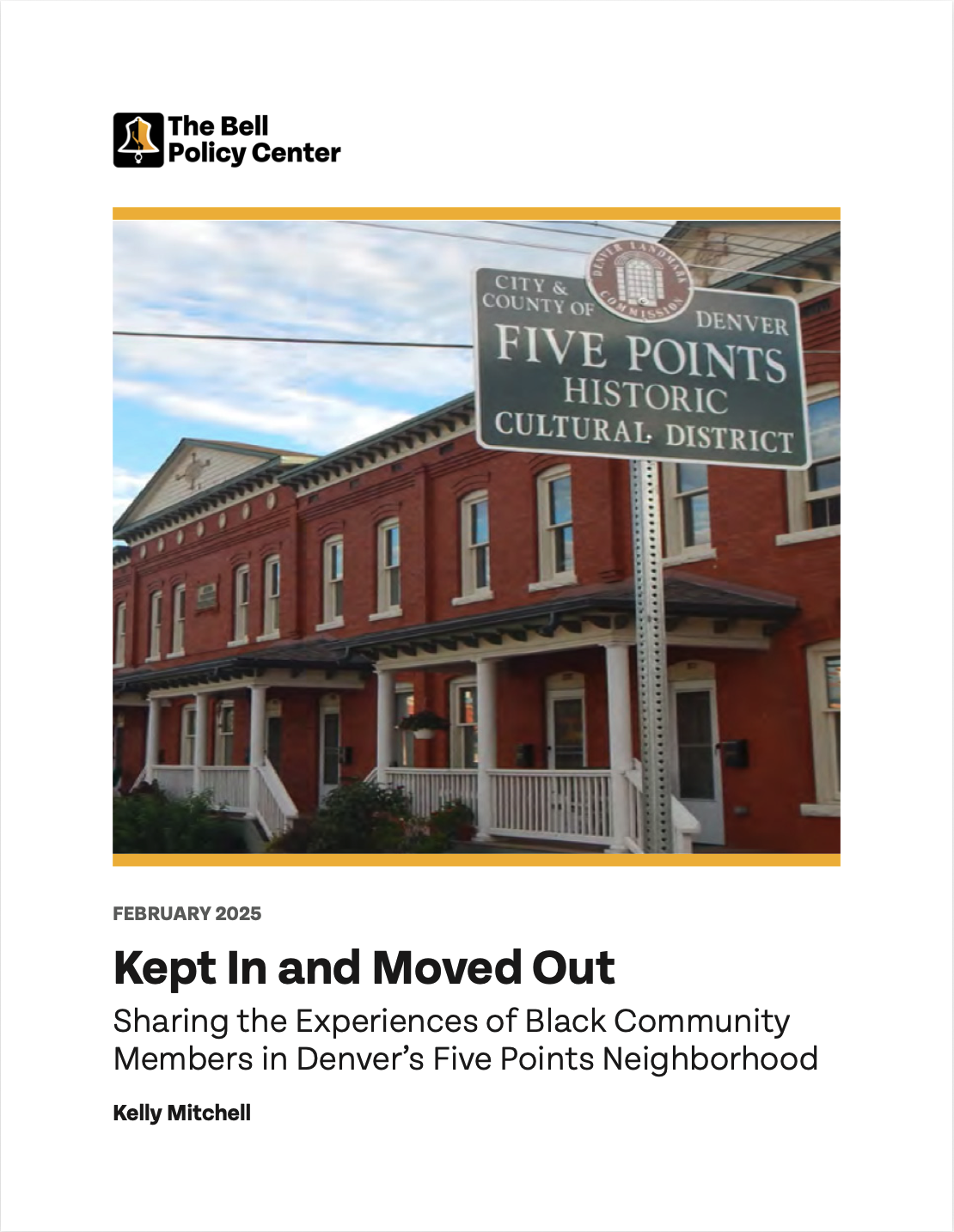
Community & Equity-Centered Study
IDG’s Kelly Mitchell was awarded a fellowship from the Bell Policy Center as part of an initiative to advance game-changing research and conversations intended to further economic mobility and equity in Colorado. This report offers a deep dive into the history of Denver’s Five Points neighborhood, drawing on policy analysis, archival research, and oral histories from the Black community. The work seeks not only to shine a light on how policies have discriminated against, exploited, and marginalized this community but also to celebrate its resilience, self-determination, and the enduring sense of community that has persisted through the years.
-
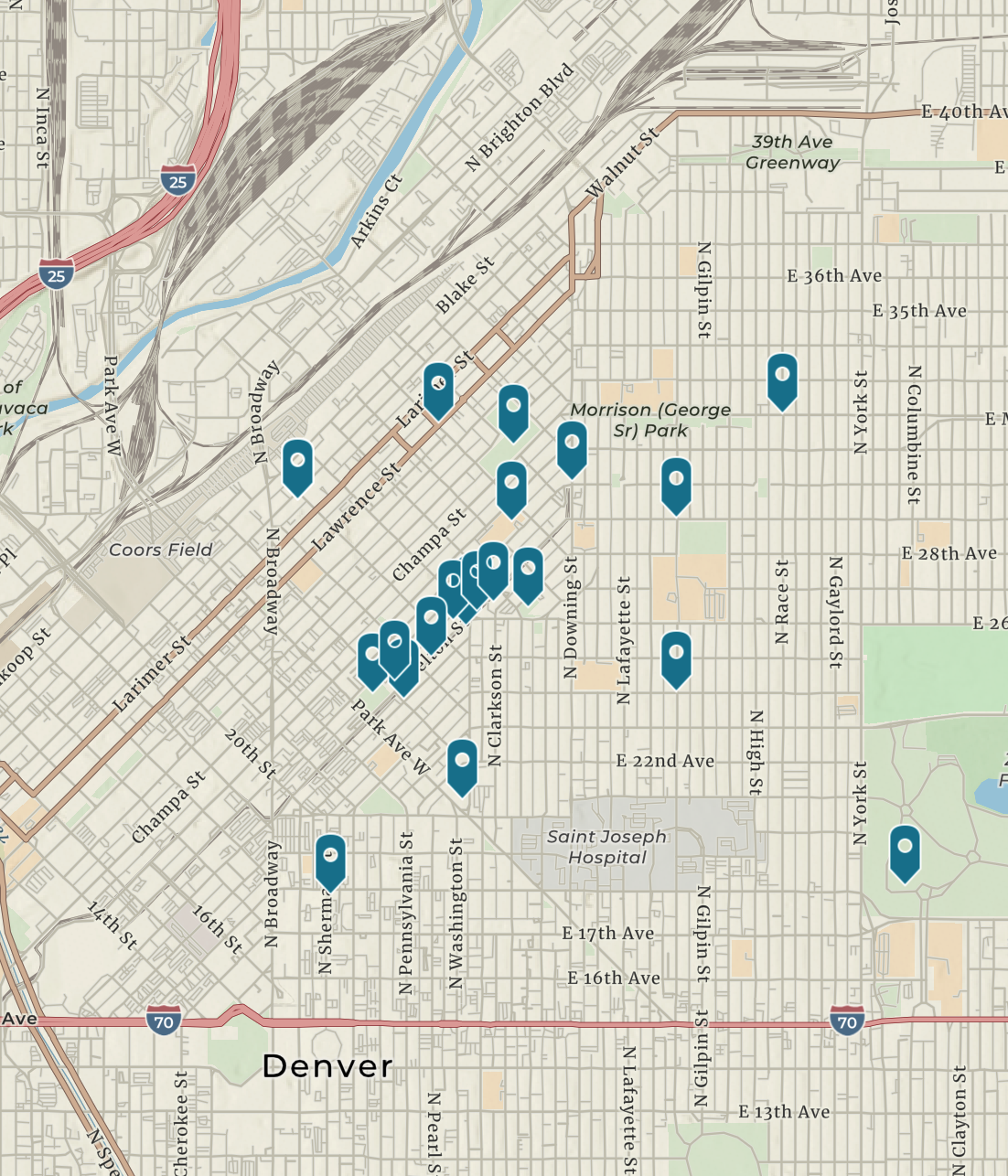
Five Points StoryMap
The Five Points neighborhood in Denver, Colorado was once known as “The Harlem of the West.” A neighborhood redlined in the 1930s, Five Points became a celebration of self-determination for the Black community in Denver. IDG’s Kelly Mitchell heard stories from Black community members and weaved them together with the policies that have impacted the area from redlining in the 1930s to gentrification today. A supplement to the written report, this interactive StoryMap places the voices of people with the locations of their shared memories in and around Five Points, enabling listeners to connect straight to the sources.
RESOURCES
Links
These tools are free and publicly available. If a link breaks, search the resource name at the parent organization’s homepage.
-
CO Data - codata.colorado.gov
Pathways to Prosperity - cdhe.colorado.gov/pathways-to-prosperity
SchoolView - cde.state.co.us/schoolview/explore/welcome
-
Colorado Talent Pipeline Report - cwdc.colorado.gov/resources/colorado-talent-pipeline-report
Colorado LMI Gateway (CDLE) - colmigateway.com
Occupational Employment & Wage Statistics (OEWS) - colmigateway.com (Occupational Data > OEWS)
MIT Living Wage Calculator - livingwage.mit.edu/states/08
CWDC Job Quality Framework - cwdc.colorado.gov/strategies/job-quality-in-colorado
National Equity Atlas - nationalequityatlas.org/indicators/occupational-segregation
Johns Hopkins Center for Opportunity and Wealth Data - cowd.sgp.jhu.edu
-
Colorado Career Advising (CCA) Tool - coloradocareeradvising.com
My Colorado Journey (MCJ) - mycoloradojourney.com
-
CDE Office of Postsecondary and Workforce Readiness - ed.cde.state.co.us/postsecondary
ICAP (CDE) - ed.cde.state.co.us/postsecondary/icap
Graduation Guidelines (CDE) - ed.cde.state.co.us/postsecondary/graduationguidelines
The Big Three / SB25-315 (CDE) - ed.cde.state.co.us/postsecondary/the-big-three
Work-Based Learning (CDE) - ed.cde.state.co.us/postsecondary/the-big-three/work-based-learning
talentFOUND WBL Continuum - cwdc.colorado.gov/strategies/work-based-learning
Colorado Essential Skills (CDE) - ed.cde.state.co.us/standardsandinstruction/standards/essentialskills
Colorado Academic Standards - ed.cde.state.co.us/standardsandinstruction/standards
Colorado CTE State Plan - coloradostateplan.com
-
Bellwether Education Partners - bellwether.org/publications/scaling-what-works
Education and Employers - educationandemployers.org
MDRC CTE Center - mdrc.org/work/projects/mdrc-center-effective-career-and-technical-education
-
TFA Meaningful Career Conversations (MCC) - ed.cde.state.co.us/postsecondary/icap/icap-background/pwrplaybookmeaningfulcareerconversations
CCA Advisor Courses - coloradocareeradvising.com

Explore Our Service Ecosystem
-
Career Pathways + Program Design
We design equitable, high quality career pathways aligned to real workforce demand, including Career and Technical Education (CTE), Postsecondary Workforce Readiness (PWR), and Work-Based Learning (WBL) or Work-Integrated Learning (WIL) models.
-
Facilitation, Convening, + Field Building
We bring educators, policymakers, employers, and community leaders together to move from discussion to shared action, aligning priorities, building consensus, and creating coordinated strategies that drive meaningful impact across education and workforce ecosystems.
-

Landscape + Data Analysis
We translate quantitative and qualitative insight into clear direction and measurable outcomes, helping organizations make informed decisions and implement strategies that are grounded in data while remaining responsive to real-world needs and evolving conditions.
-

Sustainable Funding + Implementation Planning
We help organizations navigate public funding systems and build models that support long term sustainability, aligning resources with strategic priorities, identifying funding opportunities, and creating scalable approaches that ensure lasting impact beyond initial investment.
-
Strategic Planning + Processes
We guide organizations through planning processes that bring together data, stakeholder voice, and practical constraints, resulting in plans that are clear, aligned, and ready to use, with defined priorities, actionable next steps, and the structure needed to move from strategy to implementation with confidence.

Building Pathways That Last
We work across education systems, government agencies, nonprofits, and philanthropy to turn ideas into programs that operate in real communities. Our work is grounded in data, shaped by community voice, and built to last.